GloBird Four4Free: Can Free Electricity Help You Get More From Your Home Battery?
For many Australian homeowners, getting more value from their energy system has traditionally meant one thing:
Install more solar panels.
But what happens when you don't have enough suitable roof space for additional panels?
Or perhaps your existing solar system is already as large as your property can reasonably accommodate?
This is where a different approach to managing household energy is becoming increasingly interesting.
GloBird Energy's FOUR4FREE electricity plan provides eligible residential customers with four hours of electricity usage at $0/kWh every day during the plan's free period.
For new customers who joined from 1 July 2026, GloBird currently lists the free period as 11am to 3pm local time, although customers should check their Welcome Pack for the applicable charging times. The offer applies to standard circuits, while controlled-load and dedicated circuits are excluded.
This creates an interesting opportunity for homeowners with batteries.
Instead of relying entirely on rooftop solar to charge the battery, some households may be able to charge their battery from the grid during the free period and then use that stored electricity later in the day.
But there's an important catch.
The free electricity period doesn't mean your entire electricity bill is free.
Supply charges still apply, and electricity used outside the free period is charged at the applicable rates.
So before switching plans, it's important to look at the whole electricity bill, not just the four free hours.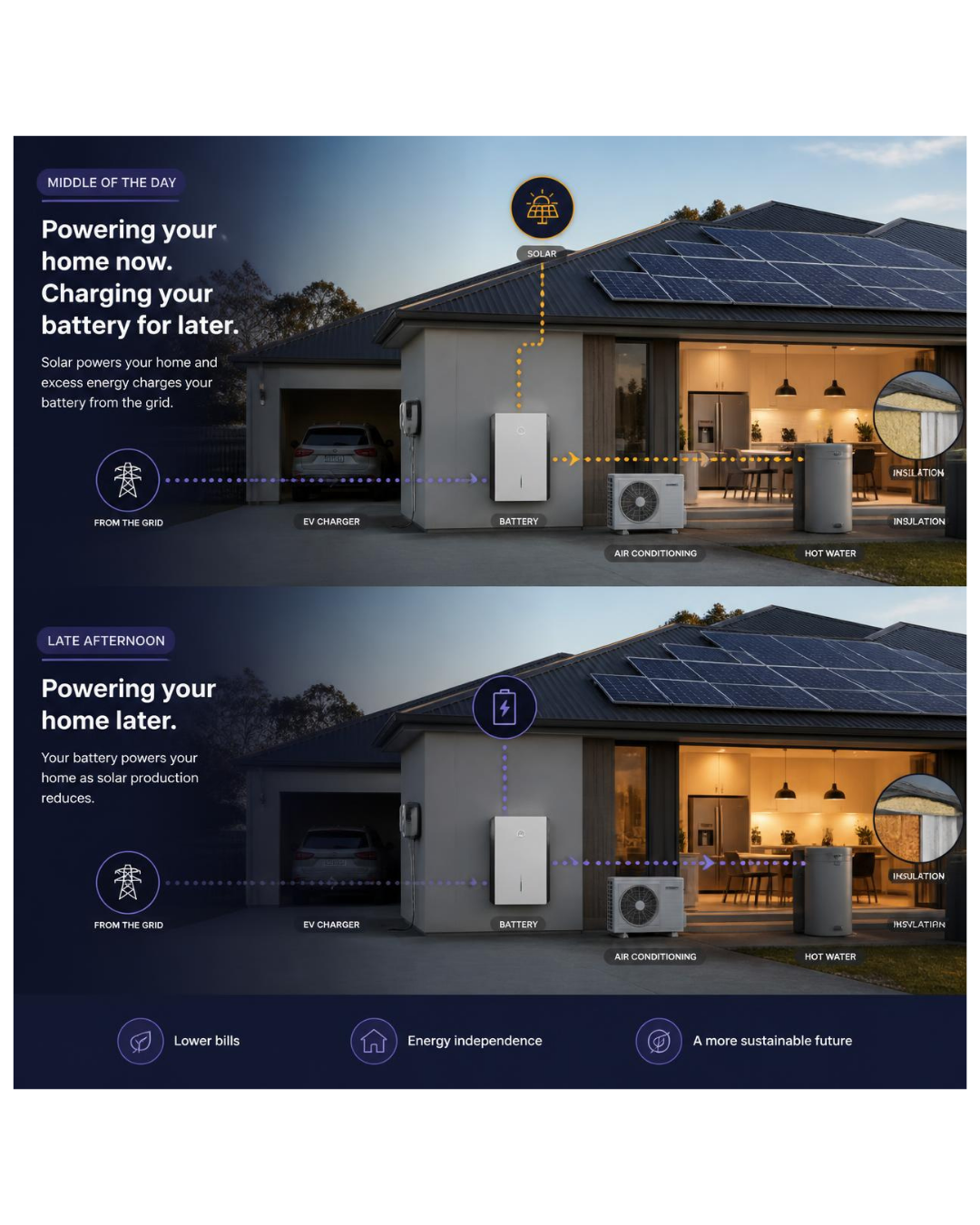
How Does GloBird FOUR4FREE Work?
The basic idea behind FOUR4FREE is straightforward.
During the designated four-hour free period, eligible electricity usage on standard circuits is charged at:
$0/kWh
For new customers joining from 1 July 2026, GloBird currently lists this window as 11am–3pm every day.
That means households can deliberately shift some of their electricity consumption into those hours.
For example, you could run:
- washing machines
- dishwashers
- dryers
- air conditioning
- ovens
- EV chargers
But a home battery introduces another possibility.
Instead of simply using the free electricity immediately, a compatible battery may be able to charge from the grid during the free period.
The stored electricity can then potentially be used later when the free period has ended.
This creates a simple energy-shifting cycle:
Free daytime electricity → Battery → Evening household use
GloBird itself markets FOUR4FREE as a plan that can be used alongside battery systems, and its battery-plan information specifically highlights "4 hours free daily grid charging."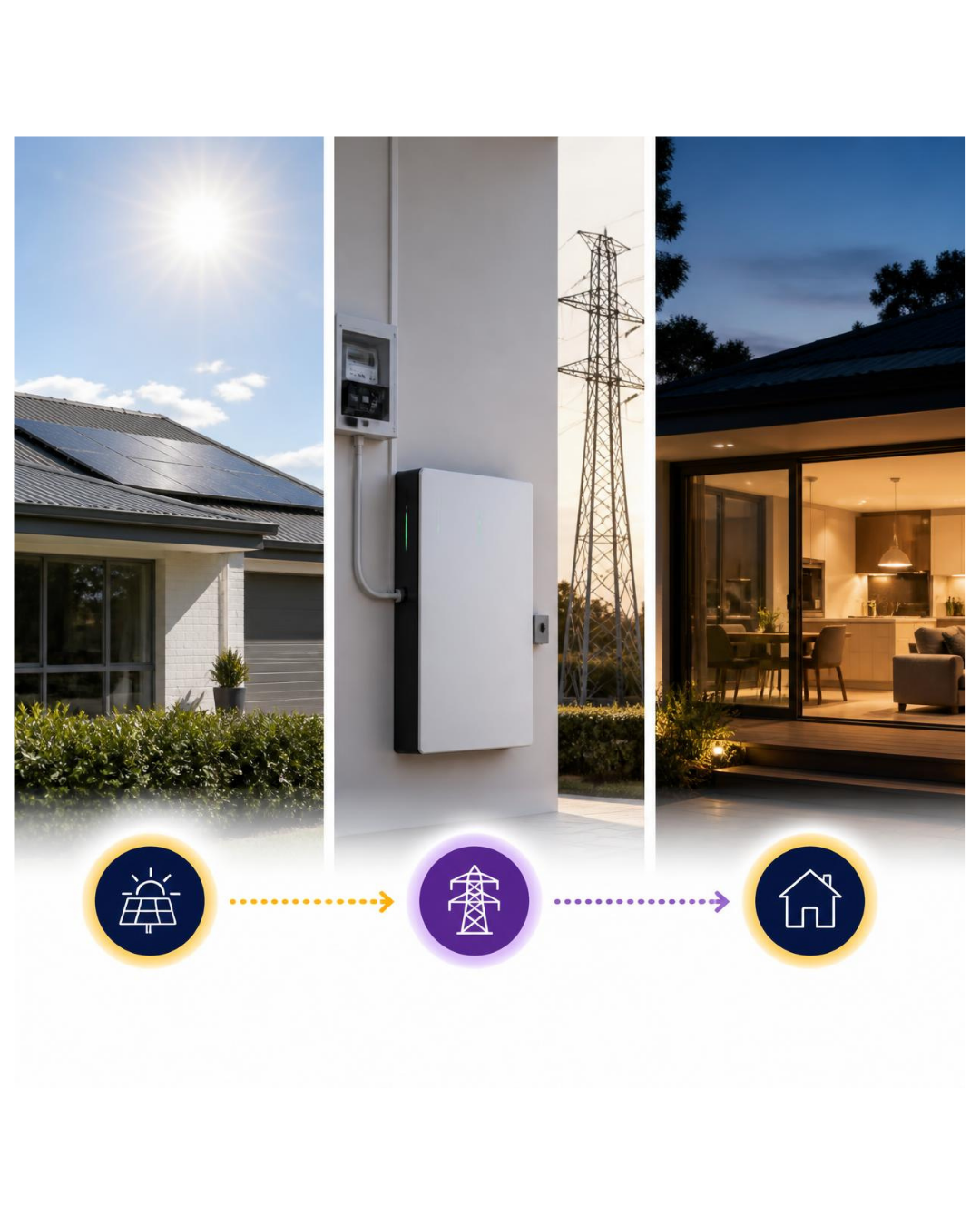
Why Would You Charge a Battery From the Grid?
At first, charging a battery from the grid might seem strange.
After all, isn't the purpose of a solar battery to store your own solar electricity?
For many homes, solar charging will still be an important part of the system.
But the bigger question is:
What is the lowest-cost way to charge the battery?
If electricity usage is charged at $0/kWh during a particular period, there may be an opportunity to use that period to charge a battery.
The battery can then provide electricity to the home later.
For example:
11am–3pm
Grid → Battery
3pm onwards
Battery → Home
This can be particularly interesting for homeowners who don't have enough roof space to install additional solar panels.
Instead of increasing solar generation, the homeowner may be able to use the electricity network as another source of energy during the free period and use the battery to shift that energy into the evening.
What If You Have Limited Roof Space?
Roof space can be a major limitation when designing a solar system.
A homeowner may have:
- high electricity consumption
- a large family
- an existing battery
- plenty of available battery capacity but limited suitable roof space for additional panels.
There may also be other restrictions.
Roof orientation, shading, property design, existing solar capacity and electrical requirements can all affect how much additional solar can realistically be installed.
In these situations, adding more panels isn't necessarily the only option.
A battery paired with an electricity plan that offers free or very low-cost daytime energy can provide another way to shift electricity from the middle of the day into the evening.
That doesn't mean every homeowner should choose a larger battery.
It means the solar system, battery and electricity plan should be considered together.
The Important Catch: Free Electricity Doesn't Mean a Free Bill
This is one of the most important things homeowners should understand before switching electricity plans.
A $0/kWh usage period does not mean every part of the electricity bill becomes $0.
GloBird states that standard usage rates apply outside the free period, while controlled-load or dedicated-circuit usage is excluded from the free offer.
Supply charges also still apply.
That means a household could enjoy four hours of free electricity every day and still have a significant electricity bill.
For example, if a household uses a large amount of electricity between the free period and bedtime, those purchases may still be charged at the applicable plan rates.
This is why you shouldn't compare electricity plans by looking only at the headline:
"4 hours free electricity."
Instead, compare:
Free usage + supply charge + rates outside the free period + household consumption
The result can be very different from one household to another.
Why Battery Size Matters
A battery's size can become particularly important when using a plan with free daytime electricity.
The objective isn't simply to install the biggest battery possible.
Instead, the battery should be sized around how the household actually consumes electricity.
Imagine a home that uses a significant amount of electricity every evening.
The homeowner may be able to charge the battery during the free period, but if the battery is too small, it may run out before the household's evening consumption is finished.
The household would then need to purchase additional electricity from the grid.
On the other hand, a battery that is significantly larger than the home's requirements may have excess capacity that isn't providing enough additional value to justify the extra upfront cost.
A proper assessment should consider:
- daily electricity consumption
- daytime usage
- evening usage
- existing solar generation
- available roof space
- battery usable capacity
- battery charging and discharge capability
- electricity plan rates
- supply charges
- how much electricity can realistically be shifted into the free period
The goal isn't to install the biggest battery.
It's to install a battery that makes sense for how the home actually uses electricity.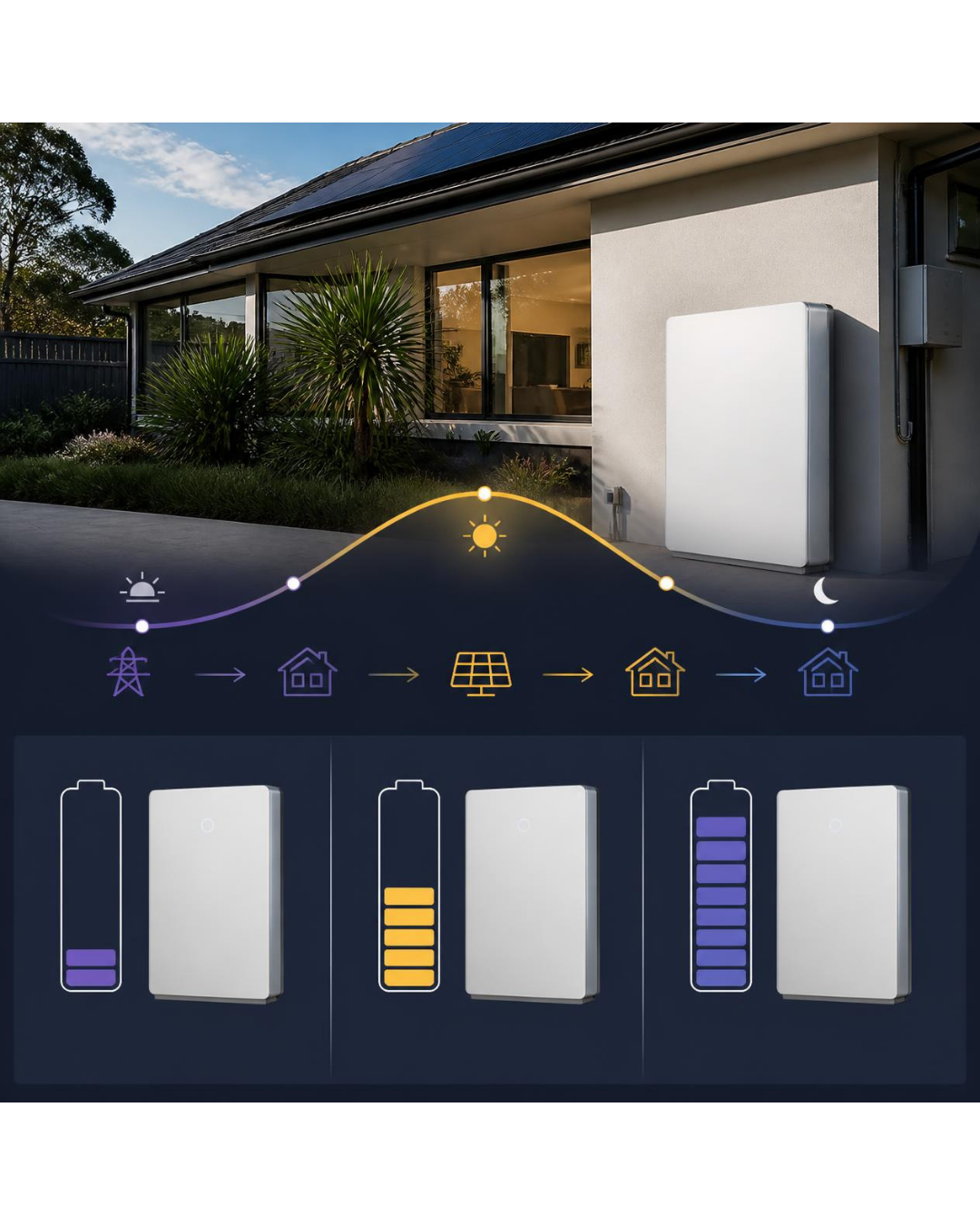
Why This Is So Popular
The growing interest in plans like FOUR4FREE comes down to a simple idea:
When you use electricity can be almost as important as how much electricity you use.
Traditionally, homeowners have focused on generating more electricity.
Solar panels generate electricity during the day.
A battery stores excess electricity.
But electricity retailers are increasingly introducing plans that encourage households to shift their consumption into particular periods.
That creates another layer of energy management.
Instead of simply asking:
"How much solar do I need?"
Homeowners can also ask:
"When is electricity cheapest?"
And:
"Can my battery help me shift that energy into the hours when I need it most?"
For households with limited roof space, this can be especially appealing.
A battery combined with a suitable electricity plan could potentially allow a homeowner to make greater use of stored energy without relying entirely on additional rooftop solar.
How to Get Started
The first step isn't necessarily choosing a battery.
It's understanding how your home currently uses electricity.
Start with your electricity bill.
Look at:
-
How much electricity do you use each day?
-
When do you use the most electricity?
-
How much electricity does your solar system generate?
-
How much electricity do you export?
-
How much roof space do you have available?
-
How much electricity do you use after the free period?
And importantly:
What are the supply charges and electricity rates outside the free period?
From there, you can start working out whether a battery and an electricity plan with free daytime usage could make sense.
We Can Also Help You Get Started
At Ador Energy, we can help you look at your solar and battery system as a complete energy solution.
Rather than simply recommending the largest solar system or battery available, we can assess how your home actually uses electricity.
We can look at:
- your existing solar system
- electricity consumption
- roof space
- solar generation and exports
- battery requirements
- battery sizing
- switchboard requirements
- backup requirements
- how your proposed battery could work alongside your electricity plan.
If you already have solar but don't have enough roof space to add many more panels, a battery may provide another way to make better use of your home's energy.
And if you're considering a retailer plan with free daytime electricity, it's worth understanding how the battery and electricity plan could work together before making a decision.
Other Alternatives
GloBird isn't the only retailer offering innovative ways to help homeowners get more value from their electricity and batteries.
Two other approaches worth understanding are Amber Electric and OVO Energy.
Amber Electric
Amber takes a different approach to a fixed free-electricity period.
Amber uses dynamic wholesale electricity pricing, combined with its SmartShift technology for compatible batteries.
SmartShift considers factors including:
- forecast household energy consumption
- forecast solar generation
- forecast wholesale electricity prices
- the homeowner's battery preferences
It can then create a battery plan that determines when the battery should charge, discharge or export electricity.
In simple terms:
-
Cheap electricity → Charge
-
Expensive electricity → Use stored energy
-
High-value export period → Potentially export
Amber says SmartShift continually looks for opportunities to optimise battery charging and exporting based on wholesale prices.
However, wholesale electricity pricing can be more complex and volatile than a simple fixed-price electricity plan.
Amber also notes that wholesale prices and forecasts can change, so homeowners need to understand how the pricing model works before choosing this type of plan.
OVO Energy
OVO Energy also offers a Free 4 Plan, giving eligible customers four hours of free electricity every day between 11am and 3pm.
Like GloBird, the plan is designed to encourage households to shift electricity usage into the daytime free period.
OVO specifically highlights appliances, heating, smart appliances and other electricity usage that can be shifted into the free window.
For a homeowner with a battery, the concept is similar:
Use the free period → Charge the battery → Use stored electricity later
However, OVO also makes clear that supply charges still apply, controlled-load usage isn't included, and its Fair Use Policy applies.
So again, homeowners should compare the complete electricity plan rather than focusing only on the free four hours.
So, Is Free Electricity Better Than Adding More Solar?
Not necessarily.
For many homes, additional solar generation can still provide excellent value.
But there are situations where adding more panels isn't practical.
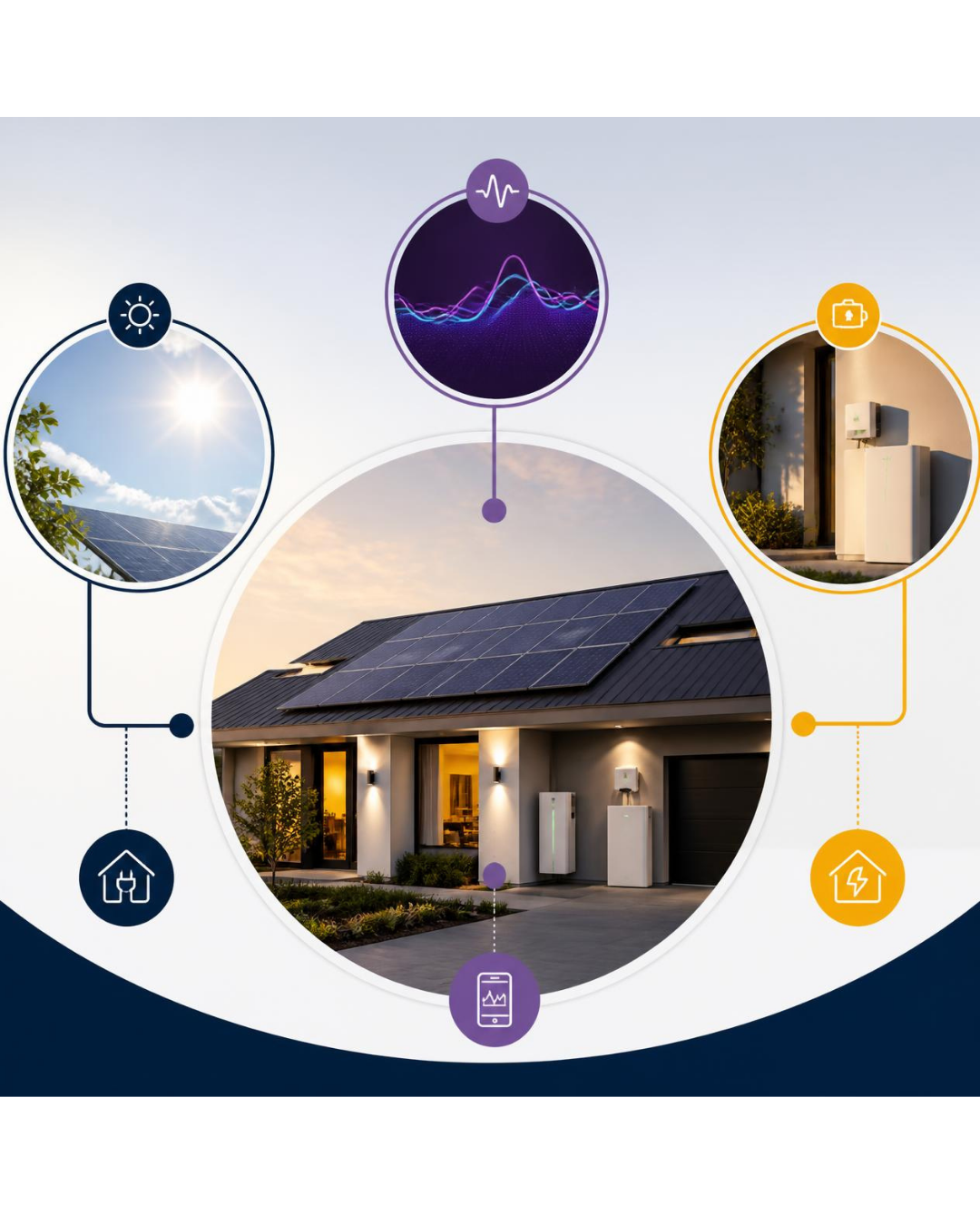
If your roof is already full, if shading limits additional generation, or if your property has other restrictions, a battery combined with an appropriate electricity plan could provide another way to manage your energy.
The key is understanding the numbers.
A plan offering four free hours can look extremely attractive.
But if your household uses a lot of electricity outside those hours, higher usage rates or supply charges could reduce the overall benefit.
Similarly, if your battery is too small to cover your evening usage, you'll still need to purchase electricity from the grid after the free period.
That's why the right question isn't:
"Is four hours of electricity free?"
It is:
"How much could this plan actually save my household over a full year?"
Is a Battery Still Worth It If You Can Get Free Electricity?
Potentially.
A battery provides something that a free electricity window on its own cannot:
flexibility.
It allows you to store energy and use it later.
Depending on the system and electricity plan, it may allow you to:
- use more of your own solar
- charge during a free or low-cost period
- reduce grid purchases later in the day
- shift energy into the evening
- potentially respond to changing electricity prices
For some homeowners, the combination of:
Solar + Battery + Smart Electricity Plan
could create a more flexible home energy system.
For others, increasing solar capacity or choosing a different electricity plan may make more sense.
There is no single solution for every household.
Thinking About Adding a Home Battery?
Before choosing a battery, it's worth looking at the entire energy picture.
Your electricity bill, solar generation, roof space, household consumption, battery size and electricity plan can all affect the final result.
At Ador Energy, we can help assess your home and determine what type of solar and battery setup may make sense for your energy usage.
Whether you already have solar, have limited roof space, are considering a new battery or want to understand how your battery could work alongside a free or flexible electricity plan, the first step is understanding your actual energy needs.
Request a Solar & Battery Assessment
Speak with Ador Energy to find out whether solar, battery storage or a combination of both could be suitable for your home.
Electricity plans, pricing, supply charges, eligibility requirements and retailer terms can change. Free electricity periods apply only to eligible usage and do not necessarily eliminate supply charges or other electricity costs. Always check the current Energy Fact Sheet and plan terms for your address before switching retailers or purchasing a battery.